
Agra City Tour Package
August 12, 2026Jaipur City Tour Package
August 12, 2026Taj Mahal India
The Taj Mahal in Agra, India, is one of the world’s most famous monuments and a UNESCO World Heritage Site. Mughal Emperor Shah Jahan built this magnificent mausoleum in memory of his beloved wife, Mumtaz Mahal. Today, the Taj Mahal stands as an enduring symbol of love and one of the finest examples of Mughal architecture.
Built beside the Yamuna River, the monument combines Persian, Islamic and Indian architectural influences. Its ivory-white Makrana marble, grand dome, four minarets, detailed Pietra Dura inlay and symmetrical Mughal gardens attract millions of visitors from around the world.
The Taj Mahal also forms an important part of the popular India Golden Triangle Tour, which connects Delhi, Agra and Jaipur.
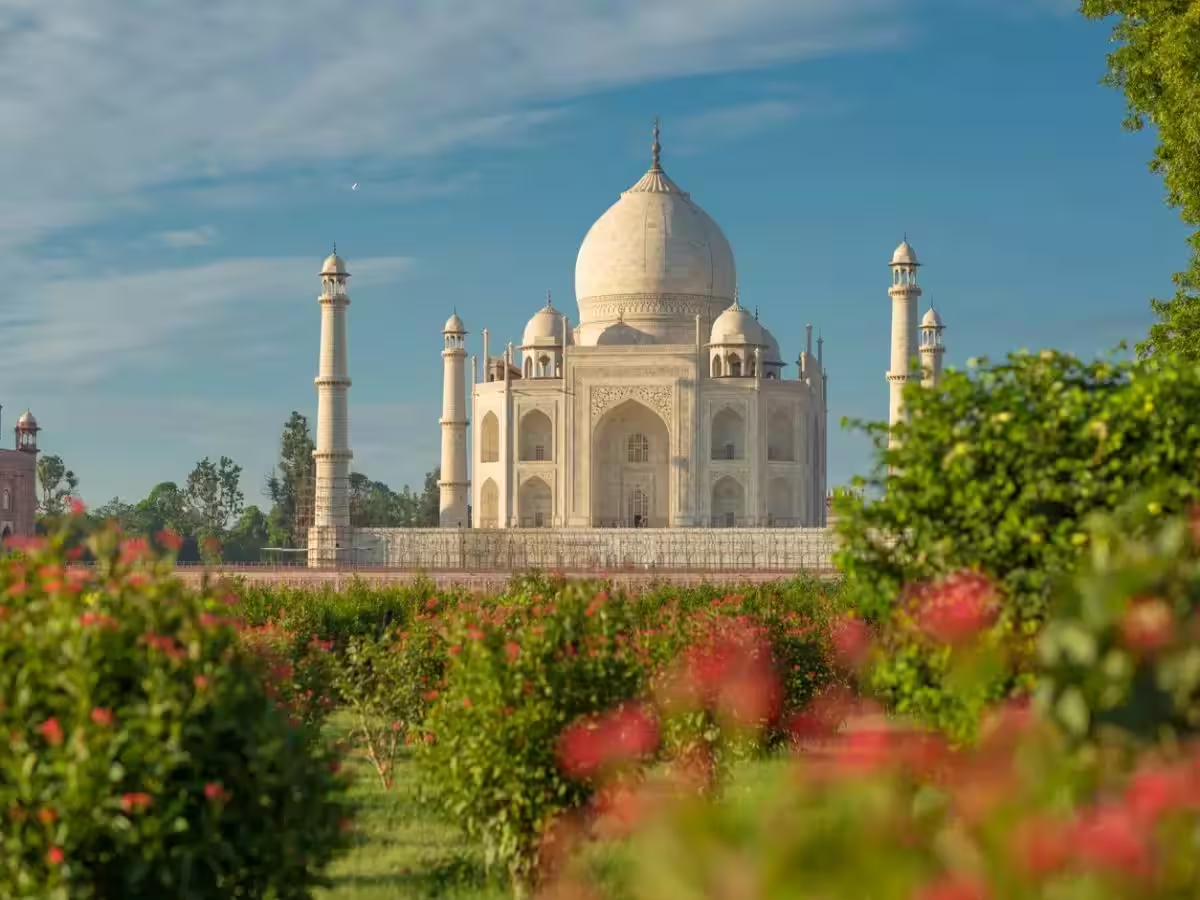
Picture By TOI
About Mumtaz Mahal
Mumtaz Mahal, born Arjumand Banu Begum in 1593, became Shah Jahan’s beloved wife and trusted companion. The couple married in 1612, and Mumtaz accompanied Shah Jahan on many of his journeys.
Sadly, Mumtaz Mahal died in 1631 while giving birth to their 14th child. Following her death, Shah Jahan commissioned the Taj Mahal as a magnificent mausoleum in her memory.
Her story gives the monument its famous connection with love, loss and remembrance.
About Shah Jahan
Shah Jahan, born Prince Khurram in 1592, ruled the Mughal Empire from 1628 to 1658. Although the Taj Mahal remains his most famous architectural legacy, he also commissioned several other important buildings.
His major architectural works include parts of Agra Fort, the Red Fort and Jama Masjid in Delhi.
During the final years of his life, Shah Jahan remained under house arrest in Agra Fort. He died in 1666, and his family later buried him beside Mumtaz Mahal inside the Taj Mahal.
Taj Mahal Architecture
The Taj Mahal architecture reflects a beautiful blend of Persian, Islamic and Indian design traditions. The complex includes the main marble mausoleum, four minarets, a grand entrance gateway, a mosque, a guest house and carefully planned Mughal gardens.
Makrana Marble
The builders used Makrana marble from Rajasthan extensively throughout the monument. The marble gives the Taj Mahal its distinctive ivory-white appearance.
Interestingly, the monument can appear to change colour during the day. Soft morning light may give the marble a pink or golden appearance, while bright daylight makes it look almost pure white. At sunset, changing light creates another dramatic effect.
Pietra Dura Inlay
One of the Taj Mahal’s most impressive decorative features is Pietra Dura, an artistic technique that uses carefully cut pieces of coloured stone to create floral and geometric designs.
Artisans also decorated the marble surfaces with delicate carvings, ornamental patterns and Quranic calligraphy. These details demonstrate the extraordinary craftsmanship of the artists who worked on the monument.
Symmetrical Design
The Taj Mahal complex follows a strong sense of symmetry. The central mausoleum sits within a carefully planned garden, while the surrounding buildings and pathways create a balanced architectural composition.
The four minarets stand around the main structure and enhance its visual harmony.
How to Reach the Taj Mahal
The Taj Mahal is located in Agra, Uttar Pradesh, around 200 kilometres from Delhi. Because Agra has good road and railway connections, travellers can easily include the city in a Delhi–Agra–Jaipur Golden Triangle Tour.
Visitors can reach Agra by:
- Train – Several trains connect Delhi with Agra.
- Road – Private cars, taxis and buses provide convenient connections.
- Air – Agra has an airport, although many international travellers use Delhi Airport and continue to Agra by road or train.
Once in Agra, visitors can use local taxis, e-rickshaws and other permitted transport options to explore the city.
Best Time to Visit the Taj Mahal
For comfortable sightseeing, October to March is generally considered the best period to visit Agra. During these months, temperatures are usually more pleasant than during the hot summer season.
However, the time of day also makes a big difference.
Taj Mahal at Sunrise
A sunrise visit offers one of the most memorable experiences. The soft morning light creates subtle pink and golden tones across the white marble.
Taj Mahal at Sunset
Sunset provides another spectacular view as the changing light gradually transforms the appearance of the monument.
Taj Mahal Full-Moon Night Viewing
On designated nights around the full moon, visitors may also experience the Taj Mahal after dark. Night viewing operates under official rules and limited availability, so travellers should check the latest regulations and booking requirements before planning a visit.
Taj Mahal Timings
The Taj Mahal is generally open from sunrise to sunset and remains closed on Fridays. The monument also offers limited night viewing on designated dates around the full moon.
Because opening hours, ticket prices and entry regulations can change, travellers should check the latest official information before visiting.
Taj Mahotsav
Taj Mahotsav is a popular cultural festival in Agra that celebrates India’s rich artistic and cultural traditions.
The festival features Indian handicrafts, traditional cuisine, folk music, dance performances and regional arts. Therefore, visitors who want to experience more than the Taj Mahal can combine their sightseeing with this colourful cultural event when the festival is taking place.
Fascinating Taj Mahal Facts
The Taj Mahal has many fascinating details that make it more than just a beautiful monument.
Here are some interesting Taj Mahal facts:
- The Taj Mahal stands beside the Yamuna River in Agra, Uttar Pradesh.
- Shah Jahan commissioned the monument in memory of Mumtaz Mahal.
- The complex represents a remarkable achievement of Mughal architecture.
- Builders used Makrana marble from Rajasthan for the main mausoleum.
- Four elegant minarets surround the central structure.
- Pietra Dura inlay adds colourful floral and decorative designs to the marble.
- Quranic calligraphy forms an important part of the monument’s decoration.
- The Taj Mahal’s appearance changes subtly with the light throughout the day.
- Shah Jahan and Mumtaz Mahal are both buried inside the main mausoleum.
- The Taj Mahal became one of the New Seven Wonders of the World in 2007.
- The monument attracts millions of visitors from India and overseas every year.
Why Visit the Taj Mahal?
A visit to the Taj Mahal is not simply about seeing a famous monument. It offers an opportunity to explore Mughal history, architecture, art and one of the world’s most enduring stories of love.
Travellers can also explore other important attractions in Agra, including Agra Fort, Mehtab Bagh and Itimad-ud-Daulah. Together, these attractions provide a deeper understanding of Agra’s royal and architectural heritage.
Whether you visit at sunrise, explore the monument during the day or experience its special night viewing, the Taj Mahal offers a memorable experience for travellers from around the world.
Experience the Taj Mahal in person and discover the fascinating history, extraordinary architecture and timeless love story behind India’s most iconic monument.
| Sr. No. | Monuments | INDIAN | FOREIGNER/NRI | SAARC/BIMSTEC | |||||
| Weekdays except Friday | Friday | Weekdays except Friday | Friday | After Visiting Taj | Weekdays except Friday | Friday | After Visiting Taj | ||
| 1 | Taj Mahal | 50/- | CLOSED | 1100/- | CLOSED | CLOSED | 540/- | CLOSED | CLOSED |
| 2 | Agra Fort | 50/- | 40/- | 650/- | 600/- | 600/- | 90/- | 40/- | 40/- |
| 3 | Fatehpur Sikri | 50/- | 40/- | 610/- | 600/- | 600/- | 50/- | 40/- | 40/- |
| 4 | Akbar’s Tomb, Sikandra | 30/- | 25/- | 310/- | 300/- | 300/- | 30/- | 25/- | 25/- |
| 5 | Itimad-Ud-Daulah | 30/- | 25/- | 310/- | 300/- | 300/- | 30/- | 25/- | 25/- |
| 6 | Mehtab Bagh | 25/- | 25/- | 300/- | 300/- | 300/- | 25/- | 25/- | 25/- |
| 7 | Ram Bagh | 25/- | 25/- | 300/- | 300/- | 300/- | 25/- | 25/- | 25/- |
| 8 | Mariyam’s Tomb | 25/- | 25/- | 300/- | 300/- | 300/- | 25/- | 25/- | 25/- |
Tourists buying tickets online will get discount of Rs.5/- for per Indian ticket & Rs. 50/- for per Foreigner ticket.
No Entry fee for children below the age of 15 years. (both Domestic and Foreigner)
Additional Rs.200/- will be charged if one wants to visit main mausoleum
CONTACT US
