
Best Places to Visit In Pondicherry & Travel Guide
August 21, 2026Holidays In India- Popular India Tours & Holiday Destinations
August 21, 2026Best Eco Tourism Destinations In India
Eco-Tourism in India: Best Eco-Friendly Destinations to Visit
Eco-tourism in India is a growing way to explore the country’s forests, mountains, wetlands, beaches and wildlife while supporting conservation and local communities. From the backwaters of Kerala and the mangrove forests of the Sundarbans to the Himalayan landscapes of Sikkim and Ladakh, India offers diverse experiences for responsible travellers.
For international visitors looking for nature, wildlife and authentic local experiences, these are some of the best eco-tourism destinations in India.
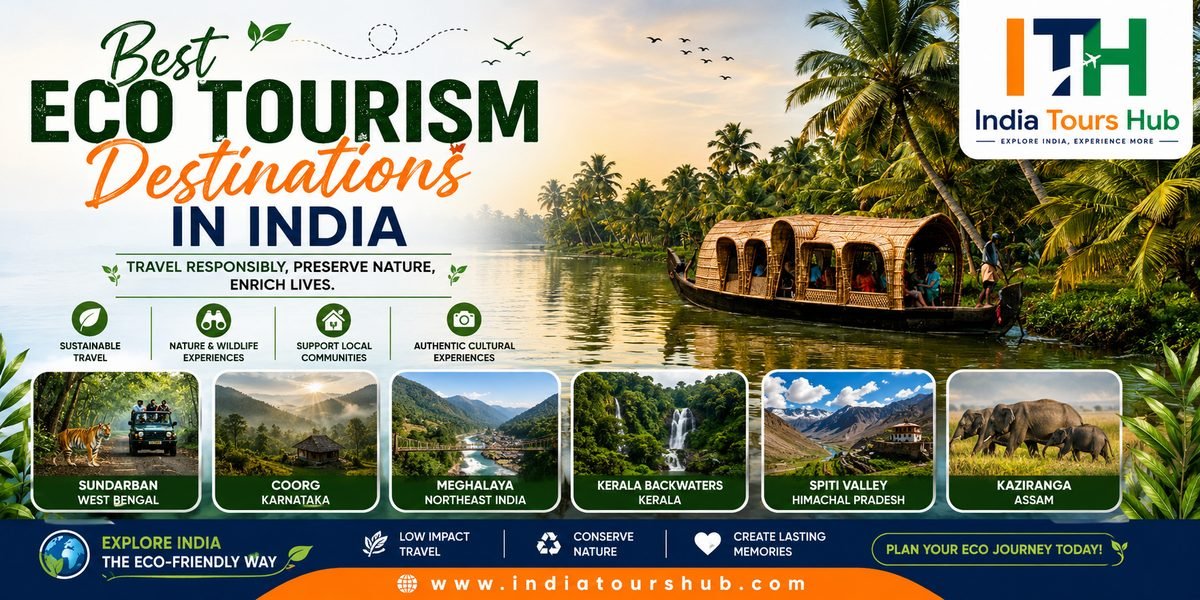
Best Eco-Tourism Destinations in India
| Destination | Best Time to Visit | Top Experience |
|---|---|---|
| Kerala Backwaters | November–February | Houseboat cruises & village life |
| Munnar, Kerala | October–May | Tea plantations & trekking |
| Thenmala, Kerala | October–March | Forest trails & adventure |
| Wayanad, Kerala | October–May | Wildlife & tribal experiences |
| Periyar, Kerala | September–April | Wildlife & bamboo rafting |
| Sundarbans, West Bengal | October–March | Mangrove boat safari |
| Kaziranga, Assam | November–April | Rhino & wildlife safari |
| Sikkim | March–May, October–December | Himalayan trekking |
| Coorg, Karnataka | October–March | Coffee plantations & nature |
| Great Himalayan National Park | April–November | Trekking & wildlife |
| Spiti Valley, Himachal Pradesh | June–September | High-altitude landscapes |
| Andaman Islands | October–May | Coral reefs & marine life |
Kerala Backwaters
The Kerala Backwaters are among India’s most relaxing eco-tourism experiences. A traditional houseboat journey through canals, lagoons, paddy fields and palm-lined villages provides an opportunity to experience Kerala’s natural landscape and rural lifestyle.
Things to do: Houseboat cruise, kayaking, birdwatching and village visits.
Munnar, Kerala
Surrounded by tea plantations, forests and mountains, Munnar is an excellent destination for nature lovers. Visitors can explore tea estates, hike through the Western Ghats and discover the region’s rich biodiversity.
Things to do: Trekking, tea plantation tours, birdwatching and waterfall visits.
Thenmala, Kerala
Located in the Western Ghats, Thenmala is recognised as India’s first planned eco-tourism destination. Its forests, walking trails and adventure activities make it ideal for travellers seeking a combination of nature and outdoor experiences.
Things to do: Nature walks, trekking, boating, cycling and adventure activities.
Wayanad, Kerala
Wayanad combines forests, plantations, waterfalls and indigenous culture. Its location in the Western Ghats makes it particularly attractive for wildlife enthusiasts and travellers interested in community-based tourism.
Things to do: Wildlife experiences, trekking, plantation visits, village walks and exploring local culture.
Periyar Tiger Reserve, Kerala
Located in the Western Ghats, Periyar Tiger Reserve is one of India’s leading wildlife and eco-tourism destinations. Boat trips on Periyar Lake, nature walks and guided forest experiences offer different ways to explore the protected landscape.
Things to do: Wildlife watching, boating, bamboo rafting, trekking and birdwatching.
Sundarbans National Park, West Bengal
The Sundarbans is the world’s largest mangrove forest and one of India’s most distinctive wildlife destinations. Its network of tidal rivers and creeks provides a unique setting for boat-based exploration, with opportunities to see mangrove wildlife and a variety of birds.
Things to do: Boat safari, birdwatching, village visits, photography and nature exploration.
Kaziranga National Park, Assam
A UNESCO World Heritage Site, Kaziranga National Park is famous for its Indian one-horned rhinoceros and diverse wildlife. Its grasslands, wetlands and forests create an exceptional habitat for mammals and birds.
Things to do: Jeep safari, wildlife photography, birdwatching and nearby village experiences.
Sikkim
Sikkim offers spectacular Himalayan scenery, forests, alpine landscapes and culturally rich mountain communities. Khangchendzonga National Park, a UNESCO World Heritage Site, is particularly important for biodiversity and high-altitude conservation.
Things to do: Trekking, hiking, birdwatching, village visits and exploring monasteries.
Coorg, Karnataka
Known for coffee plantations, forests and waterfalls, Coorg (Kodagu) is a peaceful eco-tourism destination in South India. Plantation stays and nature experiences provide a slower alternative to conventional sightseeing.
Things to do: Coffee plantation tours, trekking, birdwatching, wildlife experiences and waterfall visits.
Great Himalayan National Park, Himachal Pradesh
The Great Himalayan National Park protects an important Himalayan ecosystem and is known for its forests, alpine meadows and diverse wildlife. Unlike traditional safari destinations, the park is best explored on foot through trekking routes.
Things to do: Trekking, camping, birdwatching, wildlife spotting and nature photography.
11. Spiti Valley, Himachal Pradesh
Spiti is a remote high-altitude desert where dramatic mountains, traditional villages and ancient monasteries create a unique eco-travel experience. Community homestays allow visitors to experience local life while supporting rural communities.
Things to do: Village walks, trekking, monastery visits, photography and wildlife experiences.
Andaman Islands
The Andaman Islands are ideal for travellers interested in marine eco-tourism. Coral reefs, tropical forests and diverse marine life make the islands particularly suitable for responsible water-based activities.
Things to do: Snorkelling, scuba diving, kayaking, nature walks and marine wildlife observation.
Why Choose Eco-Tourism in India?
Eco-tourism allows travellers to experience India’s natural beauty while helping protect fragile ecosystems. Choosing locally owned accommodation, hiring local guides, avoiding single-use plastic and respecting wildlife can make a significant difference.
Responsible travel also helps local communities benefit directly from tourism.
Tips for Responsible Eco-Tourism in India
- Avoid single-use plastic and carry reusable alternatives.
- Never feed or disturb wild animals.
- Follow designated trekking and safari routes.
- Choose local guides and community-run homestays where possible.
- Respect local cultures, traditions and wildlife regulations.
- Do not litter in forests, beaches or protected areas.
- Keep a safe distance when photographing wildlife.
- Follow all rules issued by national parks and forest authorities.
Best Time for Eco-Tourism in India
The best time depends on the destination. October to March is generally suitable for many wildlife and nature destinations, while Himalayan destinations often have different trekking seasons. Kerala, the Northeast, Ladakh and wildlife parks each have their own ideal travel periods, so planning according to the local climate is important.
Plan Your Eco-Tourism Journey in India
From Kerala’s backwaters and Western Ghats to the Sundarbans, Northeast India and the Himalayas, eco-tourism offers an opportunity to discover a different side of India.
Whether you are interested in wildlife safaris, Himalayan trekking, village experiences, forests or marine adventures, India has an eco-tourism experience to match your interests.
Explore India responsibly and make your journey part of the conservation story.
CONTACT US
